
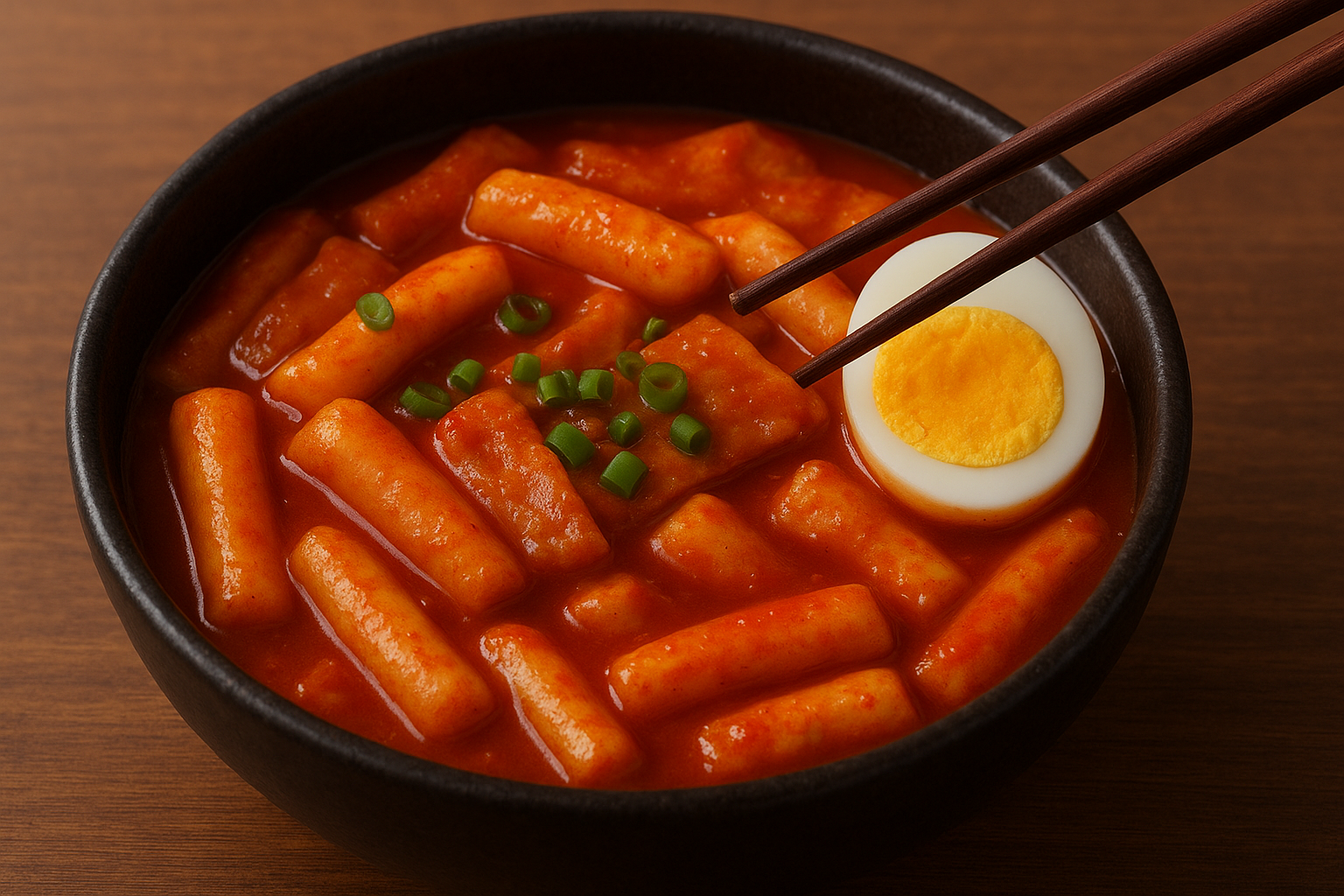
What Makes Tteokbokki So Special?
If you’ve ever strolled through the bustling streets of Seoul, chances are you’ve seen steaming pans of tteokbokki (떡볶이) drawing in crowds with their vibrant red color and irresistible aroma. This Korean street food classic is made with chewy rice cakes simmered in a rich, spicy-sweet gochujang (Korean chili paste) sauce. Beloved by locals and international food lovers alike, tteokbokki is not just a dish—it’s an experience.
What makes tteokbokki so special is its unique balance: chewy rice cakes, a thick sauce that’s both fiery and slightly sweet, and optional toppings like fish cakes, boiled eggs, or melted cheese. Whether enjoyed at a street stall, in a cozy Korean home, or at a trendy fusion restaurant, tteokbokki has secured its spot as one of Korea’s most iconic comfort foods.
Where Is Tteokbokki Most Famous?
Tteokbokki is a household name across South Korea, but it has a particularly strong presence in street food markets such as Myeongdong, Namdaemun, and Gwangjang Market in Seoul. Vendors prepare huge pans of bubbling red sauce filled with rice cakes and serve it piping hot in small portions that customers can eat on the go.
Interestingly, the dish has also evolved into countless regional variations. In some cities, you’ll find milder soy sauce-based tteokbokki, while in others, you’ll see extremely spicy versions made to challenge even the boldest spice lovers. Today, it’s not only enjoyed in Korea but also in Korean restaurants around the globe, from Los Angeles to London.
Ingredients for Authentic Korean Tteokbokki (Spicy Rice Cake)
Before diving into the recipe, let’s break down the key ingredients of this famous korean street food:
Main Ingredients
- Rice cakes (tteok): Cylindrical Korean rice cakes are the heart of this dish. They’re chewy, slightly sticky, and absorb flavors beautifully.
- Fish cakes (eomuk): These thin sheets of fish cake add a savory umami flavor and a different texture to the dish.
- Broth: You can use plain water, but for an authentic depth of flavor, an anchovy-kelp broth is recommended.
Sauce Ingredients
- Gochujang (Korean red chili paste): The essential ingredient for the bold, spicy flavor and deep red color.
- Gochugaru (Korean chili flakes): Adds extra spice and texture to the sauce.
- Soy sauce: Provides a salty, umami balance to the sweetness and spice.
- Sugar or honey: Essential for balancing the heat with a touch of sweetness.
- Garlic: Fresh minced garlic enhances the sauce’s aroma.
Optional Toppings
- Boiled eggs: A classic pairing that absorbs the sauce.
- Green onions: Add freshness and color at the end.
- Mozzarella cheese: For a modern, indulgent twist.
- Ramen noodles: Create “rabokki,” a filling version combining two favorite street foods.
Step-by-Step Guide: How to Make Authentic Korean Tteokbokki
Step 1: Prepare the Rice Cakes
If you’re using refrigerated or frozen rice cakes, soak them in warm water for 10–15 minutes. This helps soften them so they cook evenly and absorb the sauce better.
Step 2: Make the Broth
Bring 3 cups of water to a boil. For authentic flavor, simmer 4–5 dried anchovies and a small piece of dried kelp in the water for 10 minutes, then remove. This creates a rich base that elevates the sauce.
Step 3: Mix the Sauce
In a small bowl, whisk together:
- 2 tbsp gochujang
- 1 tbsp gochugaru
- 1 ½ tbsp soy sauce
- 1 tbsp sugar (or honey)
- 2 cloves garlic, minced
Step 4: Simmer Everything Together
Add the sauce mixture into the broth and stir well until smooth. Add rice cakes and sliced fish cakes, then let everything simmer on medium heat for about 10–12 minutes. Stir occasionally to prevent sticking.
Step 5: Adjust and Thicken
As the rice cakes cook, they release starch, naturally thickening the sauce into a glossy, rich coating. If the sauce becomes too thick, add a little extra water. If it’s too thin, let it simmer a few minutes longer.
Step 6: Finish and Serve
Before turning off the heat, add chopped green onions for freshness. Top with boiled eggs or mozzarella cheese if desired. Serve hot, straight from the pot, for the best taste and texture.
Variations of Tteokbokki
One of the best things about tteokbokki is its versatility. Here are some popular variations you can try at home:
- Cheese Tteokbokki: Add shredded mozzarella on top and let it melt. The cheese balances out the heat and creates a creamy, indulgent version.
- Rabokki: Mix in a pack of instant ramen noodles during the last few minutes of cooking. This makes the dish heartier and extra comforting.
- Seafood Tteokbokki: Add mussels, shrimp, or squid to the simmering sauce for a coastal twist.
- Soy Sauce Tteokbokki (Ganjang Tteokbokki): A less spicy, kid-friendly variation that uses soy sauce as the base instead of chili paste.
Nutritional Notes
Tteokbokki is a carb-heavy dish, but it’s also satisfying and energizing. Here’s a quick breakdown per serving (approximate values):
- Calories: 350–450
- Carbohydrates: 70–80g
- Protein: 6–10g (more if you add eggs, fish cake, or cheese)
- Fat: 5–10g
While it’s not considered “diet food,” it’s perfect for occasional indulgence or as a shareable meal with friends. To make it lighter, you can reduce the sugar and add more vegetables like cabbage or carrots.
Why You’ll Love This Recipe
- Authentic flavors: Spicy, sweet, and savory, just like Korean street food.
- Customizable: Adjust the spice level, add noodles, or make it cheesy.
- Quick and easy: Ready in under 30 minutes.
- Comfort food perfection: Warm, hearty, and satisfying with every bite.
Verdict: A Must-Try Korean Street Food at Home
Tteokbokki isn’t just food—it’s a cultural experience. From the bustling food stalls of Seoul to your own kitchen, this dish captures the heart of Korean comfort cuisine. Chewy rice cakes, bold flavors, and endless customization options make it a recipe worth trying again and again.
If you’re craving something spicy, satisfying, and authentically Korean, this homemade tteokbokki recipe is the perfect place to start. Whether you make it the traditional way or give it your own twist, one thing’s for sure: it will quickly become a favorite on your dining table.
Leave a Reply